
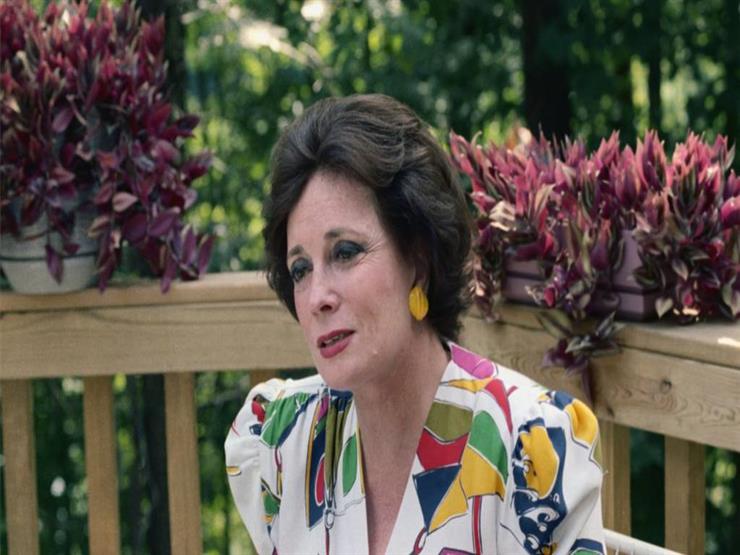
Jehan Safwat Raouf (August 29, 1933 – July 9, 2021) was an Egyptian researcher and public figure. She was the wife of the late Egyptian President Mohamed Anwar El-Sadat and the first First Lady in the history of the Egyptian Republic to enter the sphere of public service. She was a university lecturer at Cairo University, a visiting professor at the American University in Cairo, and a lecturer at the University of South Carolina. Jehan El-Sadat launched social initiatives and development projects; she founded the Wafa Wal Amal Association (Faith and Hope Association) and was a strong advocate for women’s education and their attainment of rights within Egyptian society at that time.
Women’s Rights
Jehan El-Sadat’s interest in women’s issues became prominent during her husband Anwar El-Sadat’s presidency in Egypt. Her public activities were linked to advocating for expanding women’s participation in society and improving their legal and social status. She participated in international conferences addressing women’s issues, including the World Conference of the International Women’s Year held by the United Nations in Mexico City in 1975, where she headed the participating Egyptian delegation.
Jehan El-Sadat’s name was also associated with reforms regarding women and the family in Egypt during the late 1970s. In 1979, Law No. 44 of 1979 was issued, amending certain provisions of personal status laws, incorporating rulings related to divorce, wives’ rights, and notification of marriage and divorce. The law sparked widespread debate in Egypt regarding the relationship between family law reform and women’s rights.
These amendments were referred to in some writings as “Jehan’s Laws,” in reference to the role attributed to Jehan El-Sadat in supporting reforms related to women. However, naming the laws as such does not imply that she possessed sole legislative authority; the amendments were enacted within the framework of the state’s legislative and executive authorities and subsequently became a subject of debate and legal challenge before the Egyptian judiciary.
The reforms associated with the law included provisions regarding divorce procedures, polygamy, and notifying the wife of a new marriage, as well as measures aimed at enhancing legal protection for wives. The law became part of a broader debate on reforming personal status laws in Egypt and the position of women within the family and society.
Jehan El-Sadat’s interest in women’s issues continued after the end of her husband’s presidency. She continued participating in conferences and programs related to women’s rights, peace, and development, addressing topics related to women’s participation in public life, education, work, and the family in her writings and lectures.
Peace and International Relations
Jehan El-Sadat’s public activity during her husband’s presidency was linked to initiatives related to peace and international relations. She participated in a number of international meetings and conferences, particularly those dealing with women’s issues, peace, and development, representing Egypt on international occasions during the 1970s.
The “Collar of Saint Arsenius” was presented as an official gift from Egypt to First Lady Betty Ford. It is made of gold-plated silver and cut glass, dating back to the pre-Roman-Arab era. A gift from Mrs. Anwar El-Sadat, October 27, 1975.
Following the signing of the Egyptian-Israeli Peace Treaty in 1979, Jehan El-Sadat participated in international activities and meetings associated with peace, and later continued to speak about the Egyptian-Israeli peace experience and the importance of resolving conflicts through political means. In her lectures and writings, she also addressed issues of peace, coexistence, and inter-people relations.
After the assassination of Anwar El-Sadat in 1981, Jehan El-Sadat participated in several international activities related to peace, human rights, and women’s rights. She delivered lectures at various universities and institutions, discussing her husband’s political experience and her vision for peace in the Middle East, and her name became associated with academic programs and research institutions in the United States.
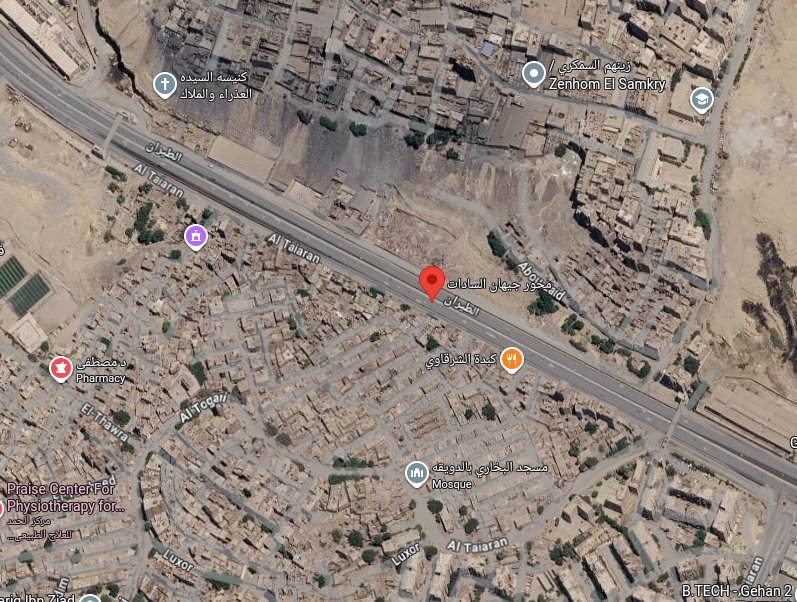

jehan El-Sadat Axis (formerly El-Ferdous Axis) is one of the most important national road network projects in Cairo Governorate.
About the Axis
- Former Name: El-Ferdous Axis.
- Reason for Naming: President Abdel Fattah El-Sisi directed to rename it to “Jehan El-Sadat Axis” to honor the national role of the late Mrs. Jehan El-Sadat.
- Cost: Approximately 1.2 billion EGP.
Route and Location
- Starts from the exit of Abu Hashed Tunnel (below Ahmed Lotfy El-Sayed Street), passing through Masr Wal Sudan Street and Ahmed Said Street.
- Intersects with Salah Salem Road under El-Ferdous Bridge, passing through Ibn Qansuh Street and the Autostrad.
- Reaches the extension of Field Marshal Tantawy Axis and Zaker Hussein Street in Nasr City.
Objectives and Advantages
- Connecting Axes: Connects central and northern Cairo areas to Salah Salem, the Autostrad, the Ring Road, and New Cairo, extending to the New Administrative Capital.
- Relieving Congestion: Contributes to reducing traffic density in Heliopolis, West Nasr City, and the 6th of October Bridge.
- Shortening Time: Reduces travel time and distances (such as connecting Nasr City to Downtown in just a few minutes), and lowers fuel consumption and pollution rates.